Guidant Business Solutions LLP Presents

A Unique Business
Transformation &
Turnaround Solution

Through its indigenously designed business tool —

The Business Arogyam Model
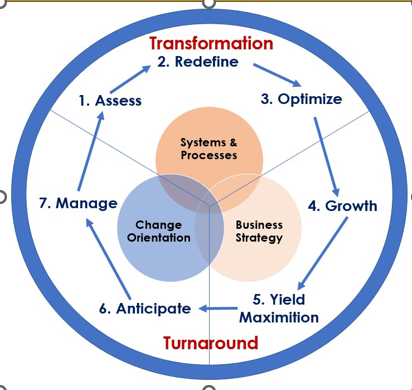
The Business Arogyam Model: Assess, Redefine, Optimize, Growth, Yield Maximization, Anticipate, Manage across Transformation and Turnaround
Transformation · Turnaround
Assess
Redefine
Optimize
Growth
Yield Maximization
Anticipate
Manage
Business Arogyam
Assess
Redefine
Optimize
Growth
Yield Maximization
Anticipate
Manage
Business Arogyam
Introduction

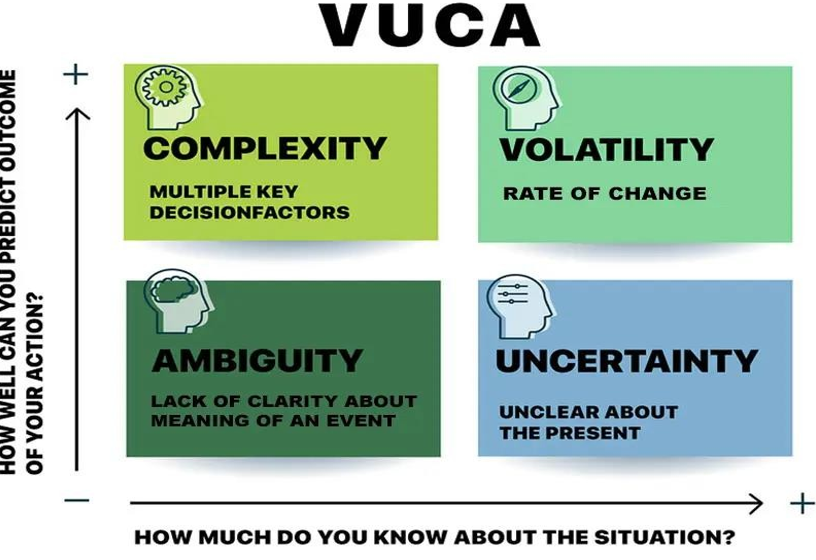
The VUCA
World

A VUCA environment can:

  • Destabilize people
  • Cause anxiety
  • Sap motivation
  • Thwart career moves
  • Make constant retraining and reshaping a necessity
  • Take huge amounts of time and effort to fight
  • Increase the chances of making bad decisions
  • Paralyze decision-making processes
  • Jeopardize long-term projects, developments and innovations
  • Overwhelm individuals and organizations
  • Take its toll on internal culture
  • “Bleed” inwards and create VUCA environments within organizations
VUCA matrix: Complexity, Volatility, Ambiguity and Uncertainty plotted by how much you know about the situation and how well you can predict the outcome

If your industry or organization is affected by this environment, you have to reconsider the way you and your business operate.

Action

From The VUCA
To A STEADY World

Every VUCA challenge has a considered response. Here is how each one is understood, and how GBS turns it into stability.

The VUCA Challenge
The STEADY Response

Complexity

Characteristic

The situation has many interconnected parts and variables. Some information is available or can be predicted, but the volume or nature of it can be overwhelming to process.

Example

You are doing business in many countries, all with unique regulatory environments, tariffs, and cultural values.

Approach

Restructure, bring on or develop specialists, and build up resources adequate to address the complexity.

Simplicity

Synthesising complex issues and tasks and utilising simplifying measures to ensure that there is significant transformation for the organization to see for itself.

Approach
Synthesize Analyse Simplify
Volatility

Characteristic

The challenge is unexpected or unstable and may be of unknown duration, but it's not necessarily hard to understand. Knowledge about it is often available.

Example

Prices fluctuate after a natural disaster takes a supplier off-line.

Approach

Build in slack and devote resources to preparedness—for instance, stockpile inventory or overbuy talent. These steps are typically expensive; your investment should match the risk.

Steadiness

Studying trends and factors responsible for volatility and addressing each trend and factor through comprehensive improvement programs. Effective Change Management is also key to ensure that the pace of change is checked.

Approach
Study Research Steady Change Management

Ambiguity

Characteristic

Causal relationships are completely unclear. No precedents exist; you face “unknown unknowns.”

Example

You decide to move into immature or emerging markets or to launch products outside your core competencies.

Approach

Experiment. Understanding cause and effect requires generating hypotheses and testing them. Design your experiments so that lessons learned can be broadly applied.

Clarity

Clarity is the ability to see things right until their logical end. It is the role of the leadership to ensure bringing clarity through transparent and open systems & processes.

Approach
Assessment Redefine Systems & Processes

Uncertainty

Characteristic

Despite a lack of other information, the event's basic cause and effect are known. Change is possible but not a given.

Example

A competitor's pending product launch muddies the future of the business and the market.

Approach

Invest in information—collect, interpret, and share it. This works best in conjunction with structural changes, such as adding information analysis networks, that can reduce ongoing uncertainty.

Certainty

Certainty is the function of meticulous and systematic planning for the future. The more robust and rigorous the Business Strategy, the higher the degree of certainty, and the higher the rate of success.

Approach
Scan Plan Strategize
The Model

The Genesis Of
The Arogyam Model

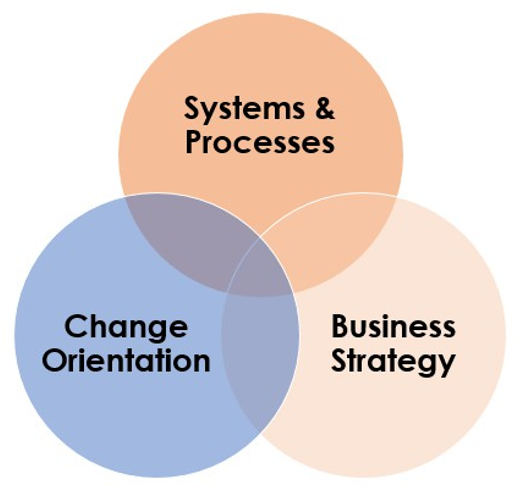
This model has been developed by GBS to help businesses transform and turn around for Growth and Yield Maximization. There are three focus areas –

1
Systems and Processes
2
Business Strategy
3
Change Orientation
Venn diagram of the three focus areas: Systems & Processes, Change Orientation and Business Strategy
The 7 action steps GBS performs for the client organization

1. Systems & Processes

A
Assessment
R
Redefine
O
Optimize

2. Business Strategy

G
Growth
Y
Yield Maximization

3. Change Orientation

A
Anticipate Change
M
Manage Change
AROGYAM
How We Engage

A Two-Year
Journey

Following the assessment, GBS shall engage with the client organisation in the following manner –

01
Year 1

Transformation

GBS works with the client organization to get it to a level where it will bring the business to a level of recognizing change.

02
Year 2

Turnaround

In this period GBS shall work with the client to ensure guaranteed turnaround ensuring aggressive growth of the organization.

Ready To Begin Your
Business Arogyam?

Speak with our consulting partners about transforming and turning around your organization.

Contact Us →